Blog

  • Experts defend US dietary guidelines

    Experts defend US dietary guidelines

    In February 2015, a committee of 14 experts who were appointed to review the research evidence and inform government officials of the relevant science that underpins the US dietary recommendations issued a 560-page report. The report’s conclusions included a request to guide the population toward nutritional patterns, which are:

    Rich in fruits, vegetables, grains, legumes, and seafood

    Moderate consumption of low-fat dairy products, alcohol, and non-fat milk (among adults).

    Reduced consumption of red and processed meat

    Low in refined grains and sugar-sweetened beverages.

    The report recommended that unhealthy foods should not be marketed to children and that food labels must be more clear. It also suggested that sustainability concerns need to receive greater attention.

    The report caused a lot of anger. It was expected, as many people consider themselves experts on nutrition, and it upset many organizations with vested interests to maintain the current US diet, with its high meat and junk food intake.

    The advisory committee received over 29,000 written replies to its recommendations. The Sugar Association and the National Cattlemen’s Beef Association both challenged the report.

    Senators complained to Congresswere particularly upset by the suggestion that experts in health and nutrition consider sustainabilityOther experts were in favor of its inclusion.

    The hearing is scheduled for October 7th.

    People in Glass Houses

    The recommendations were also met with displeasure by those who promoted high-fat and low-carbohydrate dieting. This week, the BMJ gave voice to a person who is guilty of this. Nina Teicholz, a US journalist and the author of Why Butter, Meat, and Cheese Are Part of a Healthy Diet, has conducted an “investigation.”

    New US dietary guidelines have upset the junk food and meat industries. Paul Townsend/Flickr CC-BY

    Teicholz’s criticism of the Scientific Report 2015 guidelines is in line with her arguments from her book. She says the advisory committee failed to conduct a thorough review of recent evidence or identify their conflict of interest.

    After a closer look, however, I found little evidence that the members of the committee had any conflicts of interest. The members of the committee were carefully chosen to represent a variety of viewpoints and not to represent any one group. They held public meetings and invited other experts to provide data.

    Teicholz is hard-pressed to explain his criticism of a report that’s so comprehensive, systematic, and practical. The panel used a thorough methodology that was clearly laid out and adhered to strict scientific guidelines.

    The committee studied a large amount of data over two years in a scientifically rigorous and detailed manner. The USDA Nutrition Evidence Library published the committee’s responses to scientific research questions. The committee used systematic reviews, which pay close attention to biases and sources. They also graded the evidence using strict criteria.

    Teicholz’s criticism of saturated fat is perhaps in line with her conflict of interest, which she has in promoting her ideas and those listed in the BMJ article (honoraria from the meat, dairy, and restaurant industries). In the US, saturated fat is prevalent in many foods, including pizzas, cakes, desserts, biscuits, and savory or sweet snacks. This is due to vegetable oils that have been hydrogenated and used in commercial frying. It comes partly from the high consumption of processed meats and fatty foods, such as burgers. Cheese is another major source.

    Saturated fat controversy

    The report of the advisory committee does not ignore recent controversy about saturated fats and heart disease. Discusses in detail major studies conducted between 2009 and 2014, including randomized controlled trials. The committee focused on studies that examined what replaced in the majority of diets. This was suggested by recent research reviews, which found that there is no relationship between total saturated fat intake and heart disease.

    The best evidence shows that replacing saturated fats with polyunsaturated ones improves cholesterol levels and reduces the risk of heart disease. The key is to know where the polyunsaturated fatty acids come from. For example, if you get them from snack foods or deep-fried food, it won’t help your heart.

    Some critics claim that the report of the committee advocates a high-carb or low-fat diet. This is incorrect. The report states that it is pointless to swap saturated fats for refined grains and sugar. It recommends instead foods rich in unsaturated fatty acids, echoing the World Health Organization’s recommendation that added sugars should not exceed 10% of daily calories.

    The US diet contains a lot of saturated fats, and cheese is a big source. Alan Levine/FlickrCC BY

    Teicholz says the committee ignored many low-carbohydrate studies. As the report points out, many of these studies were small, short, and often case-control or pilot studies, which rely on recalling information subjectively (both of those are not considered good evidence). If you compare the results of published studies that have been undertaken over six months, it’s not clear whether they are better than more balanced diets.

    Teicholz acknowledges that the effects of stricter low-carb diets are not sustained over time but defends his position by referring to only one meta-analysis. The authors chose to include “grey literature,” which was not peer-reviewed and came from organizations outside academic publishing channels. The study she chose also concluded that even strict low-carb diets have little clinical impact in the long run when compared to conventional therapy.

    Teicholz could have had a valid complaint if the advisory report had made recommendations based on this basis.

    Food is the only thing you should eat, not nutrients.

    It is important to know the sources of fats and carbohydrates. Talking in general terms about these macronutrients makes it difficult to differentiate between healthy foods and junk food. The advisory panel’s main message reports that diets need to be based on whole foods and not specific nutrients. This makes sense.

    Take into consideration that bacon, lard, and olive oil all contain some saturated fat. The health benefits of a diet that is high in these two fats are well documented. If anyone tries to convince you that the first two are the key to weight loss and good health, then back away slowly from the bookstore. The report notes that there is evidence to support a diet pattern that favors olive oil and almonds.

    Teicholz’s complaint is not the first. This is not a new thing. Other countries, such as Australia, also produce dietary guidelines that are criticized. This confuses the public, and some people abandon advice due to “experts always changing their mind.”

    It’s therefore not surprising that, as well as lobbyists from the meat and sugar industries as also companies selling junk food, have expressed their in response to the US report. It is a shame that the BMJ, a respected journal, published an article written by a journalist instead of an expert scientific assessment.


  • Can you live longer by drinking coffee

    Can you live longer by drinking coffee

     Alternative medicine systems discourage coffee consumption (but encourage coffee enemas). Sleeplessness and tremors are sure signs of overindulgence. There is a long-held belief that coffee consumption over some time is “bad.” The coffee is full of antioxidants that you can buy at health food stores for a lot of money.

    A new study has found that coffee drinkers are less likely than others to die.

    Wow! Great! The espresso machine is ready.

    First, it’s a modest effect. You are 10% less likely to be killed if you drink six or more coffee cups a day. It’s just an association. We do not know if coffee drinking leads to a lower death rate or if coffee drinkers tend to do other things.

    Ah, I should put away the espresso machine.

    There is a lot of evidence to suggest that moderate coffee consumption may offer some protection against diseases like Parkinson’s Disease or Alzheimer’s Disease. (Again, we do not know if the coffee itself provides this protection, but rather something else coffee drinkers are doing). It’s also delicious.

    The apparent health benefits from any food or drink should not be used as an excuse for overindulgence, such as the people who claim that drinking red wine in modest quantities is beneficial but then consume bottles of it at once.

    While I’m getting the espresso going, tell me what the latest evidence is.

    The team of researchers followed nearly 400,000 individuals for 14 years or until their death (whichever was first). The researchers asked the participants a series of questions about their coffee consumption, food intake, lifestyle, and health at the beginning of the study. After 14 years, they compared the death rates of coffee drinkers with non-coffee drinks.

    More coffee drinkers die than ever before.

    Wait! What!

    This is the problem of looking at these studies simplistically. Many other factors affect death rates. These are known as ” confounders ” (because they confuse interpretation). The increased mortality rate is due to the fact that many coffee drinkers smoke.

    Researchers would have believed that coffee is bad for you if they hadn’t measured the smoking rates of the participants. The coffee drinking and less death association is also just an assumption. Even though many things were counted, something else is responsible for the longer life span.

    How did they conclude that coffee is good for you?

    In epidemiology, they say that “confounders were controlled”. Comparing smokers who do not drink coffee to those who do, the coffee-drinking smokers have a longer liver. It’s not as simple as this. You have to use clever maths to figure out how to combine all the measurements.

    Is it a good course?

    They did have a large group of people that they tracked for a long period. However, they only included people who were relatively healthy at the start of their study (so progression patterns of disease couldn’t affect things), and they looked at a wide range of lifestyle factors.

    Researchers themselves admit that the problem was they only asked about coffee consumption when the study began. They had no idea if people increased or decreased their consumption or if they switched from decaf to regular coffee.

    They did not measure the type of coffee. Apart from separating caffeinated and non-caffeinated, they only measured caffeine. We have no idea if the majority of people are drinking Heart Burtser espressos or Floor-Sweeping instant coffee.

    This information is crucial if we are to generalize across populations. The strength of coffee in the US is different from that of Europe. I remember vividly visiting a friend in Seattle. The time was when I was a Berlin-based postdoctoral researcher. A filter coffee machine that was industrial strength was outside my lab, churning out black heart starters nearly 24/7. My friend took me to a street in Seattle, where he said the best coffee was served.

    It tasted just like pinkelwasser. This is not a compliment.

    Doesn’t sound inspiring, so what is the coffee doing to make people live longer?

    Chlorogenic acid is a major antioxidant found in coffee. Ian Musgrave

    We know what it isn’t doing. The caffeine is not the problem since decaffeinated or caffeinated drinks had similar effects (except in cases of injury and accident where caffeinated beverages were clearly superior).

    Coffee contains antioxidant chemicals like polyphenols and chlorogenic acid. People who eat foods high in antioxidants live longer and have better outcomes. It is also known that giving people only antioxidant vitamins would be a waste of time. Theof a food may have nothing to do with health. Instead, it may indicate something else.

    It’s not clear if it is the antioxidants found in coffee. It hasn’t prevented companies from adding antioxidants to instant espresso coffee (although this was done long before the study). It could be something totally unrelated, like people who drink coffee are more likely than not to walk to the coffee shop.

  • Food safety, labels should include what the companies already know

    Food safety, labels should include what the companies already know

    This outbreak is a reminder that there are problems with Australia’s food supply. After the offending ingredient had been identified and products were recalled, consumers claimed that they did not know that the berries were coming from China.

    The berry products were labeled in compliance with consumer education and current labeling laws. Prime Minister dismissed the initial calls for change despite the recall showing inadequate labeling. He claimed that the move would be detrimental to business, increase the price of food, and make it difficult for companies.

    Abbott changed that this morning when he asked Barnaby MacFarlane and Ian MacFarlane from the Agriculture Ministry to present a proposal in March to the cabinet. MacFarlane warned that consumers might have to pay for the changes.

    The current system of food labeling is flawed: It does not reveal the origins of food. The company can state that a product was made in Australia as long as at least half of the manufacturing costs were incurred in Australia.

    Consider the production of a jar jam. The total cost includes the price of the hole, the lid, and the jar. The jar could be responsible for half of the production costs, allowing jam ingredients to be imported while still being able to claim that the jam was made in Australia.

    The report of 2011 on Australia’s effective food-labeling systems described the challenges to improving transparency. The report identified country-of-origin labeling as a contentious issue and made recommendations:

    For foods that make some Australian claims, it is recommended to develop a framework for labeling the country of origin based on the weight of the components and ingredients (excluding the water) in the food.

    Other Options

    Christine Milne, leader of the Greens party, took up this recommendation. Just before the berry scare, she presented a bill that would improve transparency in country-of-origin labeling. It requires three labels to cover the place where a product was grown, manufactured, and packaged.

    In January 2012, Choice, a consumer organization, launched a Campaign about Country-of-Origin labeling after a survey revealed that 86% of respondents thought such labels were unclear.

    Choice proposes three tiers of a system that specifies “products of” (fruits and vegetables) and “manufactured” (packaged). This would include foods that multiple companies produce. It isn’t easy to separate individual ingredients. The choice will test the exact wording with consumers.

    Include the origin of imported ingredients in the “ingredients list” as a simple and practical solution. Ingredient lists are required by law to appear on all products. Ingredients are listed by volume from the most to the least.

    Peanut butter is a good example. The list of ingredients includes roasted peanuts (the first ingredient), vegetable oil, salt, and sugar. If the labeling laws required the listing of the country of origin of imported components, then the list could say roasted nuts (China), vegetable oil (Chile), Sugar (Philippines), and Salt.

    The default position would be that ingredients sourced locally would not need to be stated as being made in Australia. Only imported ingredients would have to declare the country of origin.

    It’s about Time

    The Australian Food and Grocery Council has been outraged by Milne’s bill. This is the leading food, beverage, and grocery manufacturing organization. Food manufacturers have responded to the announcement by the prime minister. The food manufacturers say that changing the labeling system would be an unreasonable burden for them.

    It is not the same as adding a system of increased reporting and testingRisk assessments and testing are important, but label changes will give consumers more confidence.

    Quality-control procedures and Australian food laws support the fact that food companies can track each ingredient’s exact origin. The only thing consumers ask for is that the companies tell them what they know.

    The change in Australia’s country of origin labeling system will give consumers the power to make informed choices on the free market. It will also eliminate the information asymmetry that keeps consumers in the dark.

  • This is how it affects them

    This is how it affects them

    We swallow food, drinks, and saliva every day. We do it about 90 times per dayWe barely think twice. We are unaware of the food choices we make each day.

    If you are unable to swallow, then the traditional Christmas roasted nuts and dried fruit can be a choking hazard. A festive snack at the market could result in an emergency hospital visit. Fear of embarrassment or of revealing they can’t manage certain foods can prevent people from telling others about their symptoms. They may take longer to eat, avoid more difficult foods, eat less, or say they no longer like the foods they previously enjoyed.

    People with swallowing disabilities can feel depressed and frustrated if they are excluded from a meal or cannot participate in the event.

    Swallowing disabilities can lead to unplanned hospitalizations with significant costs. Coughing or choking can cause reduced pleasure in mealsAspiration pneumonia if food is inhaled. Choking Death.

    Managed swallowing disability impacts family members, home routines, and household. Many family members alter the type of food they eat in order to include the person with swallowing disabilities. It is not always safe to eat the food offered at restaurants, weddings, parties, and religious events.

    The stigma associated with swallowing disability may cause a person, their partner, spouse or family member, to stop going out in order to avoid being embarrassed.

    “… “When you cannot swallow, you only think of the fact that you are unable to swallow.”

    People with swallowing disabilities need to be treated immediately.

    Speech pathologists are often the lead professionals in teams that provide services to individuals with swallowing disabilities. They assess a person’s swallow and make recommendations for changing food textures. They also identify ways to improve the person’s participation, independence, and inclusion at mealtimes. They also determine how the person with a disability can communicate their food preferences to family members and directly support workers.

    Treatment for swallowing problems is dependent on the cause. Speech pathologists teach techniques that improve oral skills. This includes preparing the patient how to take the first bite, move the food forward, and chew it before swallowing. They can advise on how to avoid choking by observing the head and neck postures and eating habits.

    The National Disability Insurance Agency recently refused funding for speech pathology services for people with swallowing disabilitiesA person’s difficulty eating and drinking for their entire life is not considered a social issue that affects participation and inclusion. This puts people and their families in danger of further exclusion and isolation.

    People with swallowing disabilities need more support and want better access to services in order to adapt to the emotional, psychological, and socio-economic changes that result from their swallowing difficulty.

  • Plastic is a major threat to the environment

    Plastic is a major threat to the environment

    Contrary to much media coverage that has placed plastic at the top of the list of environmental enemies, it is not on the same level as climate change, consumerism, and the human population explosion, which collectively threaten the biosphere.

    I have spent a good deal of my career studying the impact of plastics on marine ecosystems. We should not ignore their effects. We must be honest and responsible in reporting these effects.

    Richard Stafford and Peter Jones are two English environmental conservationists who recently wrote Ocean Plastic Pollution: A Convenient but Distracting Truth? arguing that plastic is a “convenient fact” that distracts people and governments away from the real environmental challenges facing the world.

    Why do people perceive plastic as such a threat? One reason is that accepting the lifestyle changes required to combat the climate crisis is more difficult than reducing reliance on plastics. The problem is also exacerbated by biased reporting.

    There are some misleading stories.

    In 2001, one of the first alarmist stats to be released to the public was that the North Pacific “garbage patch” contained six times as much plastic as zooplankton. Charles James Moore, the director of Algalita Marine Research and Education Foundation at the time, published the data in a paper. He reported that although zooplankton is five times as abundant as plastic, it weighs six times more. Media outlets chose to focus on the second figure.

    Moore did not mention that the statistics were based on research that only included the top few centimeters where the floating plastic is concentrated. This is important because zooplankton distribution is much more uniform with depth. Moore’s sample would have yielded a much lower number if he had taken samples through the water column.

    Read more: Climate change: obsession with plastic pollution distracts attention from bigger environmental challenges.

    Another oft-abused figure states that 99% of seabirds will have ingested plastic by 2050. Most people interpret this to mean that 99% of individual seabirds will have plastic in them. Yet the study tried to predict what proportion of species will have ingested plastic at least once. Given the prevalence of microfibres in the ocean, it is inevitable that all seabirds have already consumed some fibers. The real question is, does this have a significant impact on them? For most species, the answer is no, relative to the threats they face from fishing, invasive species, disease, and climate change.

  • Historical hot cocktails that are perfect for cold weather

    Historical hot cocktails that are perfect for cold weather

    It is cold outside, and there’s nothing quite like a hot drink to warm the cockles. In the history of British mixed concoctions, there are arguably more desirable drinks than cold for one simple reason: central heating was not ubiquitous in the UK until the late 20th century. Before that, cold drinks were something of a novelty unless you frequented American bars, which specialized in iced drinks.

    Here are five historical warming sips from Britain to see you through the bright lights of the holidays and the dark days of winter.

    1. Tom and Jerry

    The drink Tom and Jerry was first mentioned in Pierce Egan’s London magazine serial. Wikimedia

    Sportswriter Pierce Egan is credited with this precursor to the modern egg nog. It appeared in 1821 in his monthly serial Life in London, or The Day and Night Scenes of Jerry Hawthorn Esq. and his Elegant Friend Corinthian Tom, which was adapted for the stage that same year.

    The drink seemed to follow the play’s success as it traversed from London’s West End to New York’s Broadway in 1823. It was recognised as a Christmas classic in 1843 when it was revered in The Symbol and Odd Fellow’s Magazine as a more refined version of “a long concocted beverage”, the Flip. It might seem a bit fiddly to make, but the result is worth the extra effort.

    Method: In one bowl, beat the egg whites to a stiff froth. In another bowl, beat the yolks until they are as thin as water.

    Mix yolks and whites, and add the rum and spices. Thicken with sugar until the mixture attains the consistency of a light batter.

    Among the most popular gin drinks during London’s severe winter of 1822, Gin Twist was immortalized in several poems published in London newspapers. One such verse comprised 149 lines, with each stanza comparing the tipple with other popular drinks at the time, such as this one about rum:

    Ye Bailies of Glasgow! Wise men of the West!

    Without your rum bowls, you’d look certainly tristes, Yet I laugh when I’m told that liquor so cold Is as good as a foaming hot jug of gin-twist.

    It is a remarkably simple drink made with gin, sugar, water, and lemon juice, plus a lemon twist garnish to prove the concoction was made with fresh lemon juice – a true luxury back then. The Gin Twist still offers a superior drink today.

    This might seem an odd combination to a modern palate more accustomed to sugary mixers such as cola or tonic water. Still, the blend of porter or stout, gin, and brown sugar or dark treacle makes for a remarkably good winter sip. The Dog’s Nose first emerged in Charles Dickens’s 1836 book The Pickwick Papers.

    After that, the potion was frequently mentioned in newspapers and magazines for nearly a century before its popularity waned. Served at Victorian-era room temperature or heated with a loggerhead (a red-hot poker heated in the fireplace), this drink warms both the heart and soul as the wintry snows settle on the ground.

    When Ebenezer Scrooge finally came to his senses in Dickens’s 1843 novella A Christmas Carol, he said to Bob Cratchit with a smile:

    We will discuss your affairs this very afternoon over a Christmas bowl of smoking bishop, Bob!

    There is a bit of mystery to this drink’s origins. While Dickens appears to have added the “smoking” to the name, the English literary critic George Saintsbury hypothesized in his 1920 Notes on a Cellar Book that it was born at Oxford University.

    Its earliest mention is in the 1827 edition of Oxford Nightcaps, the first British book devoted to drink recipes. That book calls it a traditional drink and cites its origins in antiquity – and its rich, spicy tones and imported ingredients may have indeed made it a favorite among the elite in late medieval England.

  • You might be shocked by the amount of sugar hidden in your diet

    You might be shocked by the amount of sugar hidden in your diet

    Sugar is an added sugar that has only recently entered our diet. It was introduced when sugar from beet, sugar cane, and corn became cheaply produced. This is an unnecessary part of your calorie intake. It has no nutritional value and gives you no sense of fullness.

    Sugar is added to food by the food industry at an increasing rate. This is largely hidden from consumers, who are unaware.

    It may not surprise you that Coca-Cola contains nine teaspoons of added sugar (35g). However, similar amounts of sugar can also be found in other foods such as flavored waters (Volvic Touch Fruit Lemon/Lime, 27.5g per 500ml), vanilla yogurt (Yeo Valley Family Farm Vanilla Yogurt, 20.9g for a 150g pot), tomato soups (Heinz Classic Tomato Soup, 14.9g for a 300g portion), prepared meals (Pot Curry King Pot

    If you choose a yogurt with 0% fat, what happens if the yogurt also contains five teaspoons of added sugar? What about these?

    Not the usual suspects Sugar: Action is needed

    This sugar is clearly a factor in the rising rates of obesity and type 2 diabetes. Leading health experts have come together to combat hidden sugar and expose it so that consumers can make more informed choices about the food and drinks they consume.

    The model is similar to the one pioneered by Consensus Action on Salt and Health, which was successful in convincing companies and manufacturers over time to reduce the salt content of products by setting targets and mobilizing public awareness.

    The salt content of food products has been reduced in supermarkets by 20-40%. As a result, the UK’s salt consumption dropped by 15% between 2001 and 2011, the lowest figure in any developed country. According to the National Institute for Health and Care Excellence, this has reduced stroke and heart attack deaths by at least 9,000 each year. This will save approximately 1.5bn per year.

    It could be equally practical and effective to reduce added sugars in the UK diet by implementing a similar program of gradually reducing sugar added to food and drinks without substituting any food. Over five years, a reduction of 20-30% in the amount of sugar added to foods and beverages would be possible. This would result in an average daily calorie intake of 100kcal, helping to reverse obesity rates.

    Sugar and salt share many similarities. Sugar is also hidden in soft drinks and processed foods, just like salt. Sugar has specific taste receptors that become more sensitive if the sugar intake is reduced gradually. Over time, we may not notice the sugar levels dropping.

    It should be a success if we can convince the Department of Health of the importance of this program in reducing childhood obesity and preventing dental disease.

  • Why we can’t resist its coastal glamour

    Why we can’t resist its coastal glamour

    The summer months are when tourists flock to Europe’s coasts. But one type of seaside area has been a favorite among travelers since the 19th Century: the Riviera. The word riviera is often used to describe the French Cote d’Azur but has a broader meaning that we all recognize. The Italian word “riviera,” which means “coastline,” is used to describe a region of lakes or seaside resorts that includes small towns and has a strong tourist industry. These regions are reserved primarily for the socioeconomic elites that can afford to live in these high-cost areas.

    It also has certain other attributes. It is a word that speaks of comfort, quietness, and a great climate. We can imagine a riviera without needing to know its exact definition. Palm trees line the shore; there is a blue sky and magnificent casinos. It also has expensive food and drink and yachts that occupy marinas where there were once fishing boats.

    Are you glamorous? Galerie Estampe Mode

    The French Riviera, with its glamorous Cannes Film Festival and Monaco, a principality where one-third of residents are millionaires, epitomizes this vision. Holiday villas are located all along the Mediterranean coastline, from France to Italy. They host wealthy visitors who want to hide from the paparazzi.

    The official summer residence of France’s president is situated on a private peninsula just off the French Riviera. , despite his desire to change things, the current president, Emmanuel Macron, intends to maintain this tradition. His plan to construct a private pool there caused controversy at the beginning of summer.

    There’s more to the coast than meets the eye.

    Any land that is near water could be called a river. Most lakeside and seaside areas share the same environmental attributes: holiday accommodation, leisure and tourism services, transportation infrastructure, and a generally good climate. A Riviera’s real definition is socioeconomic exclusivity. This is what makes a coastline more attractive.

    The Riviera, as the coastline par excellence is viewed by many, captures the imagination of the public more than any other resort. Sipping an expensive spritz, you pretend for a moment that you are part of the stories, films, and social circles taking place here. This feeling is not available in every coastal town. It must be recognized by everyone and be on their mental map. This definition would not include the entire French Mediterranean coastline. Only the towns and cities located between Cannes and Monaco can truly be considered France’s most exclusive coast.

    Super exclusive in Monaco. Nick karvounis Unsplash

    Using this socioeconomic definition, more regions can now call themselves rivieras. Consider the Swiss Riviera, which is really just a handful of towns in and around Vevey & Montreux. Some of the characteristics of a riviera are completely lost by traveling a few more miles to the west or east. The Swiss have renamed this locality “Riviera – Pays d’Enhaut”.

    You can’t fake feelings.

    Others use it to acknowledge the touristic power that already exists in a particular region. Some use it to increase tourism. The English Riviera was first advertised in England in the 1980s after a popularity peak in the 1970s. Torbay, with its small coastal villages and palm trees, can sometimes resemble Nice or Cannes. The region has seen fewer visitors since the initiative despite concerted efforts to promote the label. Cornwall, which is a region that closely matches the definition of a riviera in many ways, has maintained its popularity even without using the title.

    The tourism industry has changed, and rivieras now face a more dynamic level of competition. In the tourism industry, “Instagrammable” has become more than just a buzzword: It’s a requirement. Since the 19th Century, rivieras have offered a certain standard of visual appeal to tourists. In the advertising for Riviera holidays, the idealized scenes are almost an analog version of Instagram: a couple laying in the sun with a cocktail in hand on the hotel’s private jetty while yachts and palm trees are in the background. This scene is common in social media.

    Inevitably, Instagram’s popularity will lead to other coastal areas catching up. They will become more visually appealing and less like they have been ruined by mass tourism. In turn, rivieras may lose their originality.

    Sites like Airbnb make it easier and cheaper to get into these “exclusive” areas. This might not affect the price of food, drink, or social events. However, it could change the socioeconomic balance in rivieras – either for the better or worse.

  • A simple brain training program can help you avoid alcohol

    A simple brain training program can help you avoid alcohol

    My team and I have discovered that a new brain-training method can produce positive outcomes in people who are going through detox.

    The conscious brain and the subconscious brain

    We can use our conscious minds to consider the benefits of quitting alcohol, like better sleep and a sharper morning. Consider the negative effects of drinking alcohol, such as the extra calories, cost, and risk to your physical or mental well-being.

    We may still reach into the refrigerator for a beer or pour a glass of wine as if on “autopilot”, despite our conscious thought process. It is our subconscious brain that is driving us to drink alcohol.

    When we drink often, places, sights, and smells that remind us to drink subconsciously become more prominent. This leads to an increase in drinking. This is known as cognitive bias.

    We are constantly bombarded by alcohol advertising in Australia. This can be from pubs, bottle shops, or even advertisements. A recent study found that we are targeted by alcohol advertisements on social media as frequently as once every 35 seconds.

    By reducing our cognitive bias toward alcohol cues, we can increase our likelihood that our conscious brain will drive our behaviour rather than our subconscious.

    Read more: Does brain training work? That depends on your purpose

    Training our subconscious brain

    The treatment of alcoholism using a relatively new brain training technique that targets cognitive biases has shown promising results.

    Cognitive bias modification (CBM) is a brain-training computer program that teaches people to avoid alcohol-related cues and “approach” positive or neutral ones.

    The user uses a joystick to repeatedly push away images of alcohol and pull healthier alternatives, such as bottled water, toward them. The user can practice this repeatedly to make the automatic avoidance of alcohol-related cues.

    Researchers in Europe found that cognitive bias modification , when added to residential rehab programs, reduced the rates for relapses to alcohol from 8-13% twelve months after treatment.

    In Germany, treatment guidelines recommend cognitive bias modification.

    The product is not available yet in Australia

    Read more: Women are drinking more during the pandemic, and it’s probably got a lot to do with their mental health

    What we did

    The study published in JAMA Psychiatry today was a randomised controlled trial with 300 patients in four alcohol withdrawal units from Melbourne.

    The other half was assigned to the control group and received a pretend version of the training. The other half was assigned to a control and received a fake version of the training.

    Participants had a tendency to automatically approach alcohol cues using the joystick before the treatment. We found that the cognitive bias modification generally changed this automatic tendency into an avoidance of them.

    The most important thing is that cognitive bias modification increased abstinence rates by 17% two weeks after discharge. About 63.8% reported not drinking alcohol, compared to 46.8% in the control group.

  • Thanks to fungi, you can enjoy cheese, wine, and beer during the holiday season

    Thanks to fungi, you can enjoy cheese, wine, and beer during the holiday season

    The domestication of animals, plants, and microbes has led to the creation of these foods and beverages. The domestication of plants and animals has been studied extensively, as it is believed to be one of the most important changes that humanity has experienced in recent history.

    Scientists are much less knowledgeable about the domestication and evolution of microbes. As a result, the public does not appreciate the important role they play in the food and beverages we consume all year round.

    As an evolutionary biologist, I study fungi. This group of microbes has domesticated many tasty products. I have been fascinated with two questions for a long time: What were the genetic changes which led to their domestication, and how did our ancestors manage to do it? How did our ancestors domesticate them?

    Are you curious, too? Recent studies have shed some light on these issues, so grab a Camembert and a beer and continue reading.

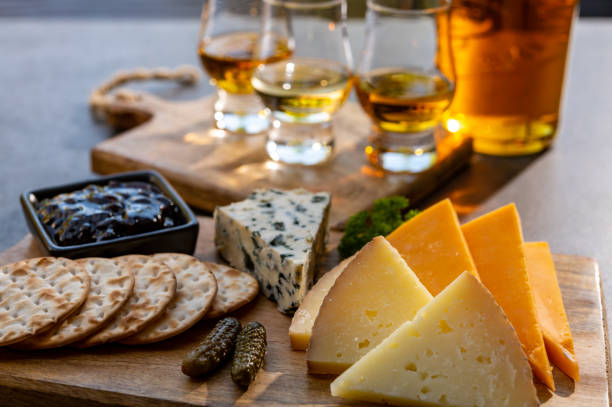
    This assortment of international cheeses is a tribute to the many microbes that have contributed to its creation. Umomos/Shutterstock.com

    Your lager may have hybrids.

    Brewer’s yeast is a domesticated product that is difficult to surpass. Brewer’s yeast is the cornerstone of the baking, winemaking, and brewing industries. It has the amazing ability to convert the sugars from plant fruits and grains. How did brewer’s yeast develop this flexibility?

    Scientists have discovered new yeast species and sequenced their genomes. They know that some of the yeasts used for brewing are hybrids. That is, they are descendants of ancient matings between individuals of two different yeasts. Combinations are often similar to both parents – for example, ligers or whopping (lion-tiger).

    The mighty brewer’s yeast is the cornerstone for the baking, winemaking and brewing industries. Wikipedia

    Typical lager yeasts, for example, are hybrids between two closely related species. The brewer’s yeast Saccharomyces Cervisiae Saccharomyces EubayanusSaccharomyces eubayanus is responsible for the production of British ales and other tasty beers. However, it grows best at warmer temperatures. Saccharomyces Eubayanus, on the other hand, grows better at cold temperatures but produces compounds that taint beer’s taste. These hybrids are a combination of Saccharomyces Cerevisiae, which has good flavors, and Saccharomyces Eubayanus, which allows for growth at lower temperatures. These hybrids are perfect for brewing in Europe’s cold winters, where lagers originated.

    Researchers have discovered hybrids that are the result of combining other Saccharomyces Species. It is not known whether hybridization occurs in yeasts used by humans to make fermented drinks for centuries.

    In order to answer this question, two teams led by graduate students Quinn Langdon and Brigida Galone from the Universities of Ghent in Belgium and Leuven examined hundreds of yeasts used in wine and beer making. Their bottom line? Hybrids rule.

    For example, a quarter (25%) of the yeasts from industrial environments are hybrids. This includes beer and wine producers.

    Some hybrids can trace their origins back to as many as four different parent species. You may wonder why there is so much hybridization. These newly discovered hybrids are similar to the larger combinations but differ in their appetite and growth rate. The hybridized preferences influence the flavor profiles and how they are used in brewing.

    Brewer’s yeasts are responsible for this variety of beer flavors and styles. They love to hybridize. 

    Mutants in your cheese

    Scientists can better understand genetic changes in foods and beverages by comparing the genomes of domesticated fungi and their wild relatives. How did our ancestors domesticate these wild mushrooms? We were not there to see how it began. Scientists are trying to solve the mystery by experimenting with wild mushrooms to see if these fungi can evolve into organisms that resemble those we use today to make food.